International Diploma in Logistics and Supply Chain Management
Build practical knowledge of how goods move from suppliers to customers with the International Diploma in Logistics and Supply Chain Management. This programme introduces the processes that help organisations purchase, store, transport and deliver products efficiently. Through 10 structured modules, …
Overview
Build practical knowledge of how goods move from suppliers to customers with the International Diploma in Logistics and Supply Chain Management. This programme introduces the processes that help organisations purchase, store, transport and deliver products efficiently.
Through 10 structured modules, you will explore procurement and supplier management, demand forecasting, inventory control, warehousing, transportation, international trade and freight forwarding. You will also study digital logistics, e-commerce fulfilment, customer service, supply chain risk and sustainability.
Practical exercises and industry-based case studies help you connect theory to everyday business situations. You will learn to compare suppliers, plan stock replenishment, improve warehouse workflows, assess delivery performance and identify opportunities to reduce costs while maintaining service quality.
What You Will Learn
- Understand the key functions of logistics and supply chain management.
- Support purchasing decisions and evaluate supplier performance.
- Apply basic demand forecasting and inventory control techniques.
- Understand warehouse operations, storage and materials handling.
- Plan transportation and distribution activities.
- Identify key international shipping processes and documentation.
- Use operational data to assess supply chain performance.
- Recommend practical improvements to efficiency, customer service and sustainability.
Who Should Enrol?
This course is suitable for beginners, students, business owners and professionals working in—or seeking to enter—logistics, procurement, warehousing, inventory, transportation and operations.
Learning and Assessment
Learning is supported by structured online lessons, reading materials, quizzes and practical case studies. A final applied project allows you to bring your learning together by developing a supply chain improvement plan.
Curriculum
Curriculum
- 10 Sections
- 6 Lessons
- 52 Weeks
- Module 1: Introduction to Logistics and Supply Chain Management6 Items
- 1.1Understanding Logistics and Supply Chain Management5 Hours
- 1.2Key Supply Chain Participants and Their Roles5 Hours
- 1.3Flow of Goods, Information and Money5 Hours
- 1.4Inbound, Outbound and Reverse Logistics5 Hours
- 1.5Supply Chain Objectives and Customer Value5 Hours
- 1.6Case Study: Mapping a Product’s Supply Chain5 Hours
- Module 2: Procurement and Supplier Management0 Items
- Module 3: Demand Forecasting and Inventory Management0 Items
- Module 4: Warehousing and Materials Handling0 Items
- Module 5: Transportation and Distribution Management0 Items
- Module 6: International Trade and Freight Forwarding0 Items
- Module 7: Operations and Supply Chain Planning0 Items
- Module 8: Digital Logistics and Supply Chain Analytics0 Items
- Module 9: Customer Service and E-Commerce Logistics0 Items
- Module 10: Supply Chain Risk, Sustainability and Improvement0 Items
Instructor

FAQs
Certificate
Certificate
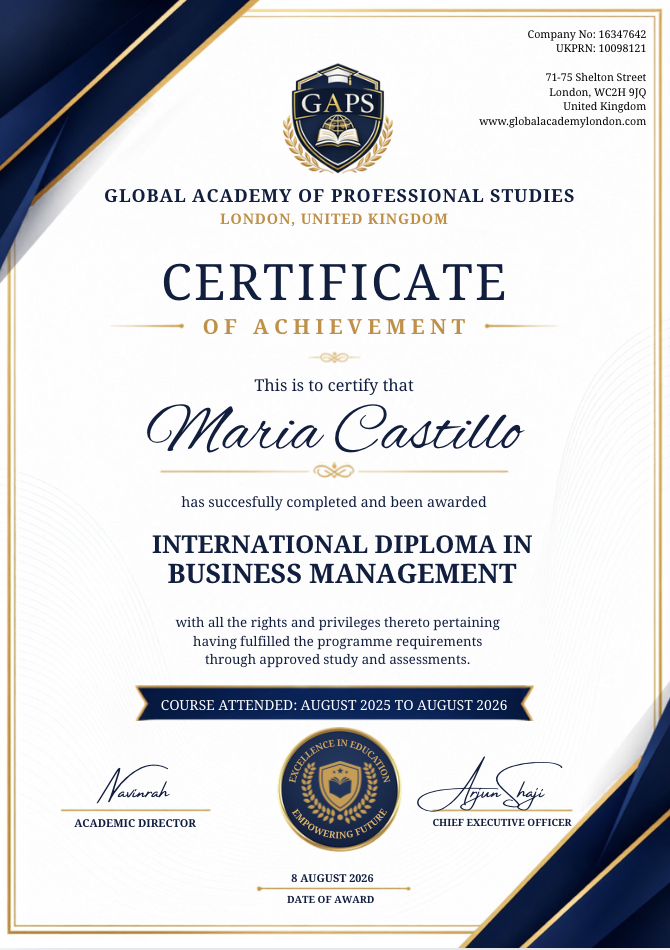
Get a Certificate On Succesfull Completion
Requirements
- No Specific Requirement. Anyone passionate to upgrade their Skills can apply
Features
- A One year UK Diploma Program that can be finished in shorter duration. Eligible to upgrate to a BBA or MBA (T&C)
Target audiences
- School leavers and students interested in careers in logistics, transportation and supply chain management.
- Aspiring logistics professionals seeking foundational knowledge of procurement, warehousing and distribution.
- Warehouse and inventory staff looking to improve stock control, storage and order fulfilment skills.
- Purchasing and procurement assistants who want to develop supplier evaluation and purchasing knowledge.
- Transport and delivery coordinators seeking a better understanding of distribution planning and service efficiency.
- E-commerce professionals and business owners managing suppliers, inventory, deliveries and returns.
- Career changers exploring opportunities in logistics and supply chain operations.
You May Like






Course Features
- Lectures 6
- Quiz 0
- Duration 1 year
- Skill level All levels
- Language English
- Students 57
- Certificate Yes
- Assessments Self
“A practical and well-structured programme that gave me a much broader understanding of business and management. I especially enjoyed the modules covering marketing, leadership, financial management and business strategy. The flexible learning format made it easier to balance my studies with other commitments, and the programme helped me feel more confident in applying business concepts in a professional environment.”
— International Diploma in Business Management Graduate
Study with expert faculty and peers from different countries, bringing global knowledge into every classroom.
About us
At Global Academy of Professional Studies we believe education has the power to connect people and transform lives. By bringing together students from different cultures and backgrounds, we foster a truly international learning experience.
Course
Useful Links
Contact us
Follow us